

Over the past decade, “leaky gut” has gone from obscure medical jargon to wellness-Instagram buzzword. And that’s exactly where the confusion starts. One camp claims it’s the root cause of nearly every modern disease. The other dismisses it as a marketing myth invented to sell supplements. The truth, as usual, sits somewhere in the middle.
Picture your intestinal lining as a fine-mesh sieve. Normally, it lets through only what your body needs — nutrients, water, electrolytes — and blocks the rest. A “leaky gut” is what happens when those holes stretch wider than they should, allowing things to slip through that were supposed to stay inside. Scientists call this intestinal hyperpermeability, and it’s a real, measurable phenomenon — not a myth. It shows up alongside a long list of conditions, and it’s directly influenced by two things: what you eat, and which bacteria live in your gut.
This article is a calm, evidence-based look at what we actually know today. You won’t find any magical “30-day healing protocols” here — real gut barrier work takes time, consistency, and individualized care. What you will find: which foods research suggests help patch the gut lining, which ones make the leaks worse, and how the food → bacteria → permeability chain actually plays out. General advice can’t replace a visit to your doctor if your symptoms are real, but it can give you a solid foundation to build on.
Six Principles of a Gut-Supportive Diet
Before we get to specific foods, it helps to understand the logic. Your gut barrier isn’t a single wall — it’s a layered defense system, kind of like a medieval castle: a mucus layer (the moat), tight junctions between cells (the mortared brickwork), immune cells (the guards), and the microbiome (the locals who know everyone). Each principle below targets one or more of those components.
Principle 1: Eat a wide variety of plants
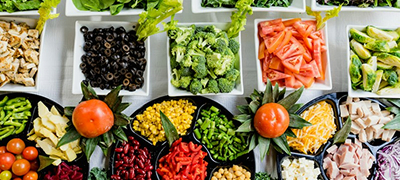
The American Gut Project (2018) — one of the largest microbiome studies ever conducted — found a striking pattern: people who ate 30+ different plants per week had significantly more diverse gut microbiomes than those who stuck to fewer than 10.
Thirty sounds like a lot until you start counting. A salad with mixed greens, tomato, cucumber, and parsley already gets you 4. A sprinkle of cinnamon on your oatmeal? That’s 5. Add lentils to your soup, blueberries to your yogurt, and a handful of almonds — you’re past 10 before the day ends.
Practical rule: count plant types, not servings. Every variety of berry, herb, spice, leafy green, legume, or nut adds +1 to your weekly count.
Principle 2: Prioritize fiber — especially prebiotic fiber
Fiber is fuel for your gut bacteria. When they digest it, they produce short-chain fatty acids (SCFAs) — and the most important one is butyrate. Butyrate is essentially food for your colon cells (colonocytes), and it keeps those “tight junctions” between cells locked down tight. Without enough butyrate, the junctions loosen and the barrier becomes leakier.
Target: 25–38 g of fiber per day (25 g for women, 38 g for men — the USDA’s current Dietary Guidelines). For reference, that’s roughly 1 cup of oatmeal + 1 apple + 1 cup of cooked lentils + 2 cups of vegetables.
A portion should be prebiotic fiber — a specialized type that selectively feeds beneficial bacteria. The best sources: onions, garlic, leeks, slightly green bananas, whole oats, asparagus, and legumes.
Principle 3: Eat fermented foods regularly
A landmark Stanford study by the Sonnenburg lab (Cell, 2021) showed that a 10-week diet with 6 servings of fermented foods per day boosted microbiome diversity and lowered inflammatory markers. That doesn’t mean you need to choke down a quart of sauerkraut daily — the point is consistency and moderation, not extremism.
Easy ways to work them in: plain Greek yogurt or kefir at breakfast, a forkful of sauerkraut or kimchi alongside lunch, a kombucha in the afternoon, and miso in soup at dinner.
Principle 4: Get enough protein — and the right amino acids
Your intestinal lining completely renews itself every 3–5 days. For comparison: your skin cells live about 28 days, and your bone cells live for years. The gut is the regeneration champion of your body.
That kind of turnover requires building blocks — amino acids. The three most important for the gut: glutamine (the primary fuel for enterocytes, your gut cells), proline, and glycine. You’ll find them in meat, fish, eggs, beans, and bone broth.
Target: 1.2–1.6 g of protein per kg of body weight if you’re active. For a 154-lb (70-kg) person, that works out to about 84–110 g of protein per day — roughly 1 chicken breast + 2 eggs + 1 cup of cottage cheese + a handful of nuts.
Principle 5: Keep a consistent eating rhythm
Your gut and its bacteria run on an internal clock — the circadian rhythm. They have “day” and “night” cycles of activity and rest, just like you do. Chaotic eating, late-night fridge raids, and extreme 16+ hour fasting windows on training days all disrupt this rhythm and weaken the barrier.
Research suggests a steady pattern of 3–4 meals at roughly consistent times produces better outcomes than extreme protocols.
Principle 6: Minimize systemic disruptors
This isn’t just about food — lifestyle plays a major role. Chronic stress makes your gut leakier, even on a perfect diet. The mechanism: under stress, your brain releases corticotropin-releasing hormone (CRH), which activates immune cells in your gut wall called mast cells. Those mast cells then loosen the barrier from the inside.
Sleep matters too. Just two nights of poor sleep (under 6 hours) is enough to noticeably reduce microbiome diversity — that’s faster than the boost from a relaxing vacation fades.
Smoking is another major hit: research shows smokers have a gut barrier roughly 40% more permeable on average than non-smokers. Diet is one lever — but it’s not the only one.
B32 — What to Eat / What to Limit
✅ Foods to include
| Food group | Examples | Why it helps | Portion / notes |
|---|---|---|---|
| Vegetables (varied) | Cabbage, carrots, beets, zucchini, squash, broccoli, cauliflower, spinach | Fiber + polyphenols + vitamin C | 14–18 oz (400–500 g) daily, at least 5 different types |
| Berries | Blueberries, raspberries, blackberries, strawberries, currants | Anthocyanins — the pigments that make berries blue or purple — feed beneficial bacteria and reduce inflammation | 1 cup daily, fresh or frozen |
| Fermented foods | Sauerkraut, kimchi, kefir, plain yogurt, kombucha, miso | Live bacteria + the beneficial compounds they produce | 1–2 servings per day |
| Legumes | Lentils, chickpeas, black beans, navy beans | Resistant starch (a type of starch that survives digestion and feeds bacteria) + protein + fiber | 1 cup cooked, 3–4 times per week |
| Whole grains | Oats, buckwheat, quinoa, barley | Beta-glucans, prebiotics | 1–2 servings daily |
| Fatty fish | Sardines, mackerel, salmon, herring | Omega-3s reduce inflammation in the gut lining | 2–3 times per week |
| Nuts and seeds | Walnuts, almonds, flaxseed, chia, pumpkin seeds | Polyphenols + omega-3s (flax, chia) | 1 oz (30 g) daily |
| Quality protein | Poultry, eggs, fish, legumes | Amino acid building blocks for gut repair | 1.2–1.6 g/kg body weight |
| Polyphenol-rich drinks | Green tea, unsweetened cocoa, coffee (moderate) | Direct effect on the microbiome | 1–3 cups daily |
| Bone broth / collagen | 6–12 hour simmered broth | Glycine, proline (evidence is modest but safe) | Optional |
❌ Foods to limit
| Food / category | Why | Level | Better alternative |
|---|---|---|---|
| Ultra-processed foods (fast food, chips, packaged snacks) | Emulsifiers and additives can literally dissolve the protective mucus layer on your gut walls (Nature, 2015) | ❌ Avoid | Whole foods |
| Sugar and sugary drinks | Disrupt the balance of bacteria — fewer beneficial, more harmful (this is called dysbiosis) | ❌ Minimize | Whole fruit, berries |
| Alcohol | Directly damages tight junctions between gut cells — like acid eating away the grout between tiles | ⚠️ No more than 1 drink/day, ideally less | Periods of abstinence are best |
| Trans fats (margarine, industrial baked goods) | Systemic inflammation | ❌ Avoid | Olive oil, avocado |
| Artificial sweeteners (saccharin, sucralose) | Data suggests microbiome disruption | ⚠️ Moderate | Stevia, erythritol |
| Gluten (with sensitivity/celiac) | In sensitive individuals, raises zonulin — a protein that acts like a “key” unlocking the junctions between cells, making the barrier more permeable | ❌ or ⚠️ — individual | Buckwheat, quinoa, rice |
| Lactose (with intolerance) | Fermentation → discomfort | ⚠️ Individual | Lactose-free or fermented dairy |
| Spicy foods (during flare-ups) | Irritates the lining | ⚠️ Temporary, during symptoms | Mild herbs |
A note on nuance. Gluten and dairy aren’t “bad for everyone.” Unless you have celiac disease, confirmed non-celiac gluten sensitivity, or lactose intolerance, there’s no evidence-based reason to cut them out preventively. The popular advice that “everyone should go gluten-free” isn’t supported by research — and it can actually reduce microbiome diversity by narrowing your diet.
B15 — What the Research Actually Says
The science on leaky gut is unevenly developed — some pieces are well-established, others are still hypothesis. Here are the key findings.
Increased permeability is a real, measurable phenomenon
You can actually measure gut permeability — there are a few ways. The lactulose/mannitol test uses two sugar molecules as markers: if they show up in your urine, your “sieve” is letting things through. A blood zonulin test measures that “key” protein we mentioned. And a LPS (lipopolysaccharide) test looks for fragments of bacterial cell walls that should be staying in your gut, not floating in your bloodstream.
A 2019 meta-analysis in Nutrients confirmed that increased permeability appears in celiac disease, Crohn’s disease, ulcerative colitis, IBS, type 1 diabetes, and fatty liver disease.
Even healthy people can become temporarily “leakier” — after intense exercise, after NSAIDs (non-steroidal anti-inflammatory drugs like ibuprofen or naproxen), or after drinking alcohol. In most cases, the barrier restores itself.
“Leaky gut syndrome” as a diagnosis — not recognized
Here’s an important detail: no major medical organization (WHO, NIH, the American Gastroenterological Association, the Mayo Clinic) officially recognizes “leaky gut syndrome” as a standalone disease. It’s a description of a state — not a disease with its own ICD-10 code. That’s why you should be skeptical of any source promising to “cure leaky gut in 28 days.”
Diet affects the barrier — evidence is solid
The Mediterranean dietary pattern has the strongest evidence base. A 2020 meta-analysis in Gut Microbes showed that 6 months of Mediterranean eating reduces permeability markers and increases microbiome diversity. The same goes for high-fiber diets (≥30 g/day).
Glutamine and mucosal regeneration
Glutamine is the most studied amino acid for the gut lining. A 2020 systematic review in Nutrients showed that glutamine supplementation in doses of 5–30 g per day (the exact dose depends on the condition — lower for IBS, higher for burns or post-chemo recovery) may help repair the gut. But these are therapeutic doses for specific diagnoses — not preventive doses for healthy people. For most of us, dietary glutamine from beans, meat, fish, and eggs is plenty.
Probiotics — they work, but every strain is different
Probiotics work, but each strain is its own “personality” — different species do different things, and not all of them help everyone. A 2021 meta-analysis in Frontiers in Immunology showed that specific strains like Lactobacillus rhamnosus GG and Bifidobacterium longum can help with IBS and IBD. But there’s no universal “best probiotic” — the effect depends on strain, dose, and the individual.
Note: the yogurt at your grocery store ≠ a clinical-grade probiotic. The marketing often blurs this line.
Limits of the evidence
Most studies are short (8–12 weeks), with small sample sizes, and often on patients with specific conditions. Applying those findings to healthy people requires caution — what helps someone with active disease isn’t always necessary for someone without it. Also, the permeability markers themselves (zonulin, LPS) have their own limitations as diagnostic tools, and scientific debate about their accuracy is ongoing.
B19 — Daily Targets for Key Nutrients
| Nutrient | Adult target | Upper limit (UL) | Sources | Note |
|---|---|---|---|---|
| Fiber | 25 g (women) / 38 g (men) | Not established | Vegetables, fruit, whole grains, legumes | Increase gradually |
| Soluble fiber | At least 6–10 g/day | — | Oats, apples, legumes, flax | Food for bacteria |
| Omega-3 (EPA+DHA) | 250–500 mg/day | 5,000 mg (NIH) | Fatty fish, algae | 2–3 fish servings/week |
| Glutamine (dietary) | 3–6 g/day (typical) | Safe up to 30 g supplemental | Meat, fish, eggs, legumes | Normal on a typical diet |
| Zinc | 8 mg (women) / 11 mg (men) | 40 mg | Pumpkin seeds, meat, seafood | Critical for barrier function |
| Vitamin D | 600–800 IU | 4,000 IU | Sun, fish, supplements | Low vitamin D = weaker gut barrier |
| Polyphenols | 500–1,500 mg (estimate) | — | Berries, cocoa, tea, spices | Not officially regulated |
| Probiotic bacteria (CFU) | 1–10 billion/day (from fermented foods) | — | Kefir, kimchi, sauerkraut | Clinical doses are different |
Sources: NIH Office of Dietary Supplements, USDA Dietary Guidelines 2020–2025, FDA Daily Values.
How to read this table. This isn’t “hit every number every day.” It’s a reference: a varied diet emphasizing whole foods will naturally cover most of these targets. Deficiencies are individual and should be diagnosed by lab work — not addressed by self-prescribed supplements.
B12 — Sample Weekly Meal Plan
⚠️ This meal plan is a general template. Calorie needs, exact portions, and food combinations vary by individual. If you have a diagnosed GI condition, food sensitivities, or allergies, work with a registered dietitian on a personalized plan.
| Day | Breakfast | Lunch | Dinner | Snack |
|---|---|---|---|---|
| Mon | Oatmeal with berries + chia seeds | Lentil soup + green salad + whole-grain bread | Baked salmon + quinoa + broccoli | Plain Greek yogurt + handful of nuts |
| Tue | 2-egg omelet with spinach and tomato + whole-grain toast | Grilled chicken breast + buckwheat + sauerkraut | Chickpea and vegetable stew | Apple + 1 oz almonds |
| Wed | Greek yogurt + homemade granola + blueberries | Baked mackerel + quinoa + grilled vegetables | Pumpkin soup + whole-grain bread | Kefir + handful of berries |
| Thu | Buckwheat porridge with walnuts and apple | Quinoa bowl with tuna, avocado, mixed vegetables | Herb-roasted chicken + sweet potato + spinach | Carrots with hummus |
| Fri | Cottage cheese pancakes with berries | Lentil hummus + vegetable crudités + whole-grain pita | Baked trout + brown rice + cauliflower | Green tea + 2 dates |
| Sat | Avocado toast + poached egg + kimchi | Borscht (beet-based vegetable soup) + whole-grain bread + plain Greek yogurt | Slow-braised beef with vegetables + quinoa | Kefir + flaxseed |
| Sun | Buckwheat pancakes + Greek yogurt + berries | Roasted poultry + green salad with olive oil | Steamed salmon with vegetables + quinoa | Handful of walnuts |
Notice what’s happening. This plan includes 4–5 different grains, 3 protein sources, 10+ vegetables and fruits, fermented foods 4–5 times per week, fish 3 times, and legumes 4 times. That’s exactly the 30+ plants per week target we discussed at the start.
B33 — Who Should Be Cautious
The general approach — eat varied, add fiber — is safe for most healthy adults. But there are conditions where you should consult a doctor before changing your diet.
Absolute (don’t go solo)
| Condition | Why it’s risky | What to do instead |
|---|---|---|
| Active IBD flare (Crohn’s, UC) | Coarse fiber can worsen symptoms during a flare | Diet should be prescribed by your gastroenterologist |
| Celiac disease (suspected or diagnosed) | Requires strict gluten-free protocol + ongoing monitoring | Doctor + RD with celiac specialization |
| SIBO (small intestinal bacterial overgrowth) | Prebiotics and fermented foods can worsen symptoms | Treat the SIBO first |
| Acute pancreatitis or gastritis flare | Tough vegetables, legumes, and ferments are too much to digest | Medical diet during the flare |
| Diverticulitis flare | Temporarily requires low-fiber intake | Gradual reintroduction under supervision |
Relative (be careful, ideally with professional support)
- Pregnancy and breastfeeding — not the time to experiment with elimination diets or new supplements.
- IBS — some foods on the “good” list (legumes, broccoli, garlic) can worsen symptoms. A low-FODMAP approach (a diet that temporarily removes certain fermentable sugars that cause bloating) may be needed.
- Food allergies and sensitivities — eliminate only confirmed triggers, individually.
- Immunosuppressants, antibiotics, chemotherapy — discuss live-culture foods (fermented, probiotics) with your doctor.
- Chronic kidney disease — protein and potassium restrictions may apply.
- Diabetes — carbohydrate counting and blood-sugar monitoring still come first.
💡 The rule of thumb: if you’re not sure, consult before you start — not after the discomfort begins. Changing your diet isn’t a neutral act, especially with a chronic condition.
B05 — Who Benefits Most From This Approach
People with functional GI issues
This is the largest group — bloating, irregular bowel movements, post-meal discomfort without a clear diagnosis. The principles in this article often produce noticeable improvement within 6–12 weeks. But: before drawing your own conclusions, get evaluated to rule out organic disease.
People with autoimmune conditions
Hashimoto’s thyroiditis (autoimmune inflammation of the thyroid), rheumatoid arthritis (when the immune system attacks the joints), and psoriasis (an autoimmune skin condition) — these often show increased gut permeability. Diet therapy here is a supplement to medical treatment, not a replacement. The evidence is more modest than we’d like, but the risks of a whole-foods approach are minimal.
People post-antibiotics
Antibiotics are a serious hit to the microbiome. Recovery typically takes 4 weeks to several months. During this window, emphasizing fermented foods, prebiotic fiber, and plant diversity is well-supported.
Athletes with high training loads
Intense exercise — especially prolonged cardio — temporarily increases gut permeability. This is well-documented in the research. Athletes need adequate quality protein, omega-3s, antioxidants, and recovery-focused nutrition.
Adults 50+ with signs of “inflammaging”
“Inflammaging” is a portmanteau of inflammation + aging. It refers to the slow, low-grade inflammation that accumulates with age — like rust building up over time. The Mediterranean pattern (polyphenols, omega-3s, fiber) is one of the best-studied approaches for this population.
B14 — Common Myths
Myth 1: “Leaky gut causes every modern disease”
Where it came from. Increased permeability really does show up in many conditions — from depression to autoimmune disease. So it’s tempting to assume it’s the cause.
Why it’s not that simple. Correlation ≠ causation. In most cases it’s unclear whether permeability causes the disease, the disease causes permeability, or both are downstream of a shared factor (inflammation, dysbiosis, stress). Current science leans toward a bidirectional relationship, not a one-way causal chain. “Fix your gut, fix everything” is an oversimplification that doesn’t hold up.
Myth 2: “Gluten damages everyone’s gut”
Where it came from. In people with celiac disease, gluten genuinely damages the intestinal lining via the zonulin pathway (that “key” protein that unlocks the junctions between cells). From there, it’s a short hop to “gluten is bad for everyone.”
Why it’s not that simple. Celiac disease affects about 1% of the U.S. population. Non-celiac gluten sensitivity (NCGS) affects another 0.5–6%. The range is wide because NCGS is hard to diagnose, and researchers still debate the exact prevalence. For everyone else, there’s no convincing evidence that gluten itself causes harm. In fact, whole grains containing gluten (rye, whole wheat) are excellent sources of fiber and folate — cutting them out narrows your nutrient base.
Myth 3: “More probiotics = better”
Where it came from. Marketing plus the oversimplified logic of “beneficial bacteria = more = better.”
Why it’s not that simple. Each probiotic strain has its own “personality” — different strains do different things. A 2018 study in Cell showed that in some people, probiotics don’t colonize the gut at all — and in others, they actually slow microbiome recovery after antibiotics. There’s no universal “best probiotic.” Regular fermented foods plus varied fiber is a simpler — and often more effective — strategy than expensive supplements.
Myth 4: “Bone broth heals the gut lining”
Where it came from. Bone broth contains glycine, proline, and gelatin — the building blocks of connective tissue. It seems logical that it would be “food for the gut.”
Why it’s not that simple. There are virtually no human clinical studies showing that bone broth specifically heals intestinal permeability. You can get glycine and proline from a varied diet with adequate protein. Bone broth is a nutritious food — it’s just not medicine. Enjoy it if you like it. Don’t expect magic.
The Bottom Line
“Leaky gut” sits at the intersection of real physiology and marketing oversimplification. Increased intestinal permeability is a genuine phenomenon — it appears in a range of conditions and responds to dietary changes. But it’s not a standalone diagnosis, not the “root of all disease,” and not something to try to self-treat with a magic protocol.
A smart approach to gut health through diet is really just a return to basic, time-tested principles: variety in plant foods, fermented foods, adequate fiber and protein, minimal ultra-processed food, and a consistent rhythm of eating and sleep.
If you’re wondering where to start, don’t start with buying 10 supplements. Start with one simple step: this week, add 2–3 new plant foods you haven’t been eating, and one serving of a fermented food per day. Pay attention to how you feel.
If you have chronic symptoms — don’t start with blogs. Start with a gastroenterologist. “Leaky gut” is often a companion to something more specific, and that something is worth diagnosing.