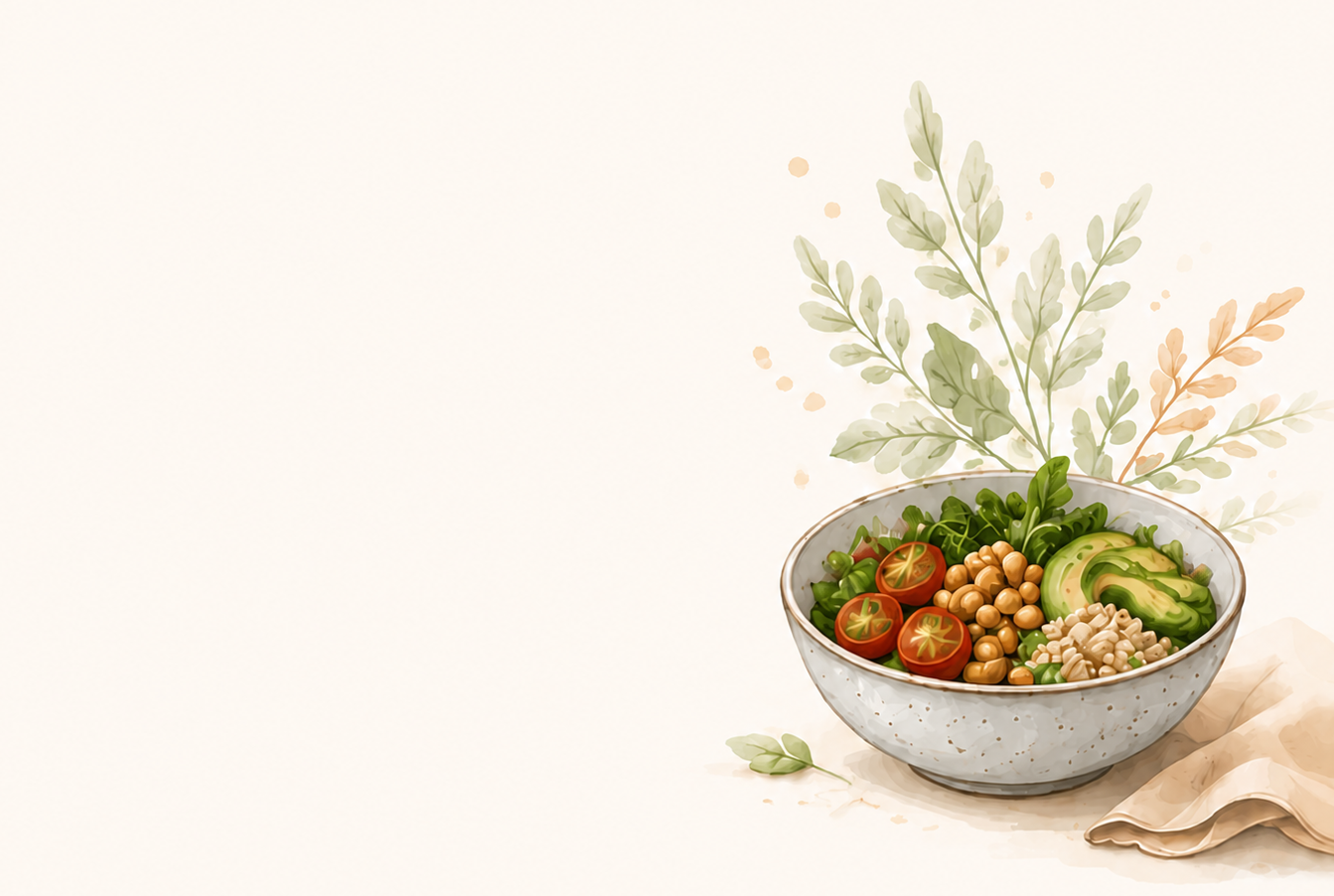

Constipation is one of the most common digestive complaints. Systematic reviews estimate that 16% to 33% of adults worldwide experience symptoms of chronic constipation, and women and older adults are affected at roughly twice the average rate. Despite how widespread it is, many people live with the problem for years without changing how they eat — even though diet is the first, and often sufficient, line of help. This isn’t simply “eat a prune.” It’s a systematic approach to fiber, fluids, and eating habits.
This guide focuses on the practical: which foods to add, which to scale back, how much to drink, and how to build a day’s menu. It does not cover medication and is not a substitute for seeing a gastroenterologist — especially if your constipation is chronic or comes with pain, blood in the stool, or unexplained weight loss.
Table of Contents
Core principles of a constipation diet
1. Enough dietary fiber
Dietary fiber — the soluble and insoluble plant fibers that pass through the small intestine undigested — is the main dietary tool for normalizing bowel movements. Insoluble fiber (in whole grains, vegetables, and wheat bran) adds bulk to stool and speeds its passage through the gut. Soluble fiber (in oats, legumes, apples, and psyllium) absorbs water and forms a gel that softens stool and makes it easier to pass.
Most people get only 12–15 g of fiber a day, well short of the recommended 25–38 g. Increase it gradually — by about 3–5 g per week — to avoid bloating and gas. Ramping up too fast, even with healthy foods, backfires.
2. Fluids — the foundation that makes fiber work
Fiber doesn’t work without enough fluid: fibers absorb water, and when there isn’t enough to go around, they can actually harden the contents of the gut. Aim for about 6 to 8 cups (1.5–2 L) of plain water a day, on top of the fluid you get from food. With heavy exercise or in hot weather, go up to about 10 cups (2.5 L).
A practical rule: a glass of warm or room-temperature water right after you wake up triggers the gastrocolic reflex — your gut’s natural cue to start moving. This simple step is the recommended first move for functional constipation, and it works best in the morning.
3. Regular meals
The gut is sensitive to rhythm. Erratic eating, skipped breakfasts, and meals on the run disrupt the natural waves of peristalsis. The ideal pattern: three main meals and one or two snacks at roughly the same times each day. Breakfast matters most — the gastrocolic reflex is strongest in the morning, and a regular breakfast trains your gut to a predictable rhythm.
Chewing slowly, giving yourself time to eat, and avoiding distractions at the table aren’t minor details — they’re part of preventing and correcting constipation.
4. Plant fats
A completely fat-free diet can make constipation worse: fats stimulate the release of bile, which acts as a natural laxative, and trigger contractions of the gallbladder and intestines. Include healthy fats — olive oil, flax seeds, avocado, nuts — every day. One or two tablespoons of olive or flaxseed oil drizzled over a salad or a bowl of grains is a simple, effective habit.
5. Probiotics and prebiotics
An imbalance in the gut microbiome is linked to functional constipation. Probiotic foods — plain kefir, unsweetened yogurt, sauerkraut, kimchi — support the beneficial bacteria involved in regulating motility. Prebiotics — the fibers in onions, garlic, bananas, Jerusalem artichoke, and chicory root — are the “food” those bacteria feed on.
Combining probiotics and prebiotics (synbiotics) outperformed either one alone in some studies.
What to eat: foods that help
| Food group | Examples | Why it helps | Suggested amount |
|---|---|---|---|
| Whole grains | Oats, buckwheat, brown rice, whole-grain bread, bulgur | Insoluble fiber speeds transit | 3–4 servings/day |
| Vegetables | Broccoli, carrots, beets, spinach, zucchini, squash, cauliflower | Fiber + water + magnesium | at least 14 oz (≈400 g)/day |
| Fruit | Prunes, pears, kiwi, apples with skin, figs, plums | Sorbitol, pectin, insoluble fiber | 2–3 servings/day |
| Legumes | Lentils, chickpeas, beans, peas | Soluble + insoluble fiber | 3–4 times/week, introduce gradually |
| Cultured dairy | Kefir, plain unsweetened yogurt, cultured buttermilk | Probiotic cultures, microbiome support | 1–2 servings/day |
| Seeds | Flax, chia, psyllium husk | Soluble fiber, holds water | 1–2 tbsp/day, always with water |
| Nuts | Almonds, walnuts | Healthy fats + fiber | about 1 oz (30 g)/day |
| Oils | Extra-virgin olive, unrefined flaxseed | Stimulate bile flow and peristalsis | 1–2 tbsp/day |
| Fluids | Plain water, herbal teas (chamomile, fennel, peppermint) | Softens gut contents | 6–8 cups (1.5–2 L)/day |
What to limit
| Food | Status | Why | Better choice |
|---|---|---|---|
| Baked goods (white bread, pastries) | Avoid | No fiber; slows transit | Whole-grain bread, bran crackers |
| Fast food, fried food | Avoid | Excess fat without fiber; disrupts rhythm | Home-cooked meals with vegetables |
| Processed meats (sausages, hot dogs) | Avoid | Virtually no fiber + preservatives | Cooked chicken or turkey |
| Fatty red meat (large amounts) | Limit | Long transit time; slows peristalsis | Fish, poultry, legumes |
| Whole milk (large amounts) | Limit | Casein may slow motility in some people | Kefir, yogurt |
| White rice (in excess) | Limit | Binding effect | Brown rice, buckwheat |
| Alcohol (beer, wine, spirits, cocktails) | Avoid | Dehydrates the body | Water, herbal teas |
| Coffee (large amounts) | Limit | Worsens dehydration when overused | Chicory coffee, decaf, roasted-grain substitutes |
| Refined sweets | Limit | Empty calories; crowd out fiber | Fruit, dates, prunes |
Note: Distinguish “strictly avoid” from “have less often.” The goal isn’t a rigid restrictive diet — it’s shifting the balance toward fiber and fluids.
What the science says
Fiber and bowel frequency
A systematic review and meta-analysis in Alimentary Pharmacology & Therapeutics (Yang J. et al., 2012) pooled five randomized controlled trials and found that increasing fiber intake significantly raises bowel-movement frequency in people with functional constipation. The effect was strongest for psyllium (psyllium husk) compared with wheat bran — both for frequency and stool consistency.
A systematic review in the World Journal of Gastroenterology (2015) confirms that soluble fiber is more effective than insoluble for softening stool, while insoluble fiber is better for adding bulk and speeding transit. A fair caveat: most of the included trials were short (up to 12 weeks) and ran on relatively small samples.
Kiwi and prunes: natural remedies with real evidence
Kiwi turns out to be especially well studied. A 2022 RCT in the American Journal of Gastroenterology (Chey W.D. et al., n=184) found that eating two kiwifruit a day for four weeks significantly increased bowel-movement frequency and reduced transit time compared with psyllium and prunes — with no side effects. The effect is attributed to actinidin (a protein-digesting enzyme) and kiwi’s unique fiber profile.
Prunes (dried plums) are a traditional, well-studied remedy: a meta-analysis of four studies in Alimentary Pharmacology & Therapeutics (Lever E. et al., 2014) confirmed that prunes outperform psyllium for stool frequency and consistency. The effect comes from a combination of fiber, sorbitol, and chlorogenic acids.
Probiotics and constipation: what the meta-analyses show
A meta-analysis of 14 randomized controlled trials in The American Journal of Clinical Nutrition (Dimidi E. et al., 2014) found that probiotics speed gut transit and increase bowel-movement frequency by an average of 1.3 times per week. The most consistent effects came from Lactobacillus and Bifidobacterium strains. The authors caution that some samples were small and results vary by strain and dose — so it’s premature to name specific “best” products.
The role of hydration: a supporting but necessary factor
On its own, drinking more fluid without also increasing fiber has only a small effect on bowel frequency, according to a review in the European Journal of Clinical Nutrition (2003). But when you’re short on fluid, the colon pulls more water out of the stool, hardening it. So hydration is a required condition for fiber to work — not a standalone “therapy.”
Daily fiber and fluid targets
Sources: National Academies of Sciences (Institute of Medicine) Dietary Reference Intakes; USDA Dietary Guidelines for Americans 2020–2025; NIH Office of Dietary Supplements; WHO. Targets for constipation are approximate.
| Group | Age | Recommended fiber (DRI/NIH) | Target for constipation | Fluid target | Notes |
|---|---|---|---|---|---|
| Children | 2–5 | 15 g/day | +5 g | 4–5½ cups (1.0–1.3 L) | WHO |
| Children | 6–11 | 20–25 g/day | +5 g | 5–7 cups (1.2–1.7 L) | |
| Teens | 12–17 | 25–30 g/day | up to 35 g | 6–8 cups (1.5–2.0 L) | |
| Women | 18–50 | 25 g/day | 25–35 g | 7–8 cups (1.6–2.0 L) | DRI |
| Men | 18–50 | 38 g/day | 35–40 g | 8–10 cups (2.0–2.5 L) | DRI |
| Women | 51+ | 21 g/day | 25–30 g | 7–8 cups (1.6–2.0 L) | NIH |
| Men | 51+ | 30 g/day | 30–38 g | 8–10 cups (2.0–2.5 L) | NIH |
| Pregnant | — | 28 g/day | 28–35 g | 8–9½ cups (2.0–2.3 L) | DRI, ACOG |
| Lactating | — | 29 g/day | 30–35 g | 9½–10 cups (2.3–2.5 L) | DRI |
⚠️ Increasing fiber above 50 g/day without enough fluid can cause bloating, gas, or worse constipation. Pace yourself: +3–5 g per week, always alongside more fluid.
A sample one-day menu
| Meal | Time | Example | Note |
|---|---|---|---|
| On waking | 7:00 a.m. | A glass of warm water (8–10 oz) | Triggers the gastrocolic reflex |
| Breakfast | 7:30–8:00 a.m. | Oatmeal made with water + 1 tbsp flax seeds; kiwi or a pear | Soluble fiber + a motility boost |
| Snack | 10:30 a.m. | 4–5 prunes + 1 cup (8 oz) kefir | Sorbitol + probiotics |
| Lunch | 1:00 p.m. | Broccoli-and-chickpea purée soup; a steamed chicken cutlet; 1 slice whole-grain bread | Legumes + fiber + moderate protein |
| Snack | 4:00 p.m. | An apple with the skin + a small handful of almonds (about 1 oz) | Fiber + healthy fats |
| Dinner | 6:30–7:00 p.m. | Baked salmon; spinach, beet, and carrot salad with olive oil | Omega-3 + fiber + bile stimulation |
| Before bed | 9:00 p.m. | 1 cup (8 oz) kefir or cultured buttermilk | Evening probiotics |
| Through the day | — | At least 6–8 cups (1.5–2 L) of water between meals | Don’t swap it for coffee or juice |
⚠️ This menu is a guide. Calories and composition are individual. For a specific plan for chronic or recurrent constipation, work with a registered dietitian or gastroenterologist.
When the diet needs caution or medical supervision
A higher-fiber diet with plenty of fluid suits most people with functional constipation. But there are conditions where adjusting your diet on your own may be insufficient or even risky.
| Condition | Type of limit | Why it’s risky without a doctor | What to do instead |
|---|---|---|---|
| Irritable bowel syndrome (IBS) | Relative | More fiber can worsen symptoms; a low-FODMAP diet may be needed | See a gastroenterologist; follow a tailored diet |
| Crohn’s disease, ulcerative colitis (flare) | Absolute | High fiber can trigger a flare | Only under medical supervision |
| Adhesions / partial obstruction | Absolute | More bulk is dangerous where there’s narrowing | Surgical or GI consult |
| Kidney or heart failure | Relative | A 2+ L fluid target may be contraindicated | Fluid volume set only by your doctor |
| Type 2 diabetes | Relative | Rapidly adding fruit and legumes needs carb-balance adjustment | See an endocrinologist or dietitian |
| Pregnancy | Relative | Some herbal laxatives (senna, rhubarb) are contraindicated | Make diet changes after talking with your OB |
| Children under 2 | Absolute | Fiber and fluid needs differ fundamentally from adults | Only on a pediatrician’s advice |
If you’re not sure this approach fits your situation, check before you start — not after discomfort shows up.
Who benefits most
Pregnant women
Constipation is one of the most common symptoms in pregnancy, affecting about 40% of women at some point. The causes are hormonal (progesterone slows peristalsis), the growing uterus, and iron supplements. For this group it’s especially important to raise fiber to 28–35 g/day, drink at least 8 cups (2 L) of fluid, and include prunes, pears, oatmeal, and kefir. Most laxatives are off-limits in pregnancy, so a dietary approach is the first line — but under an OB’s or dietitian’s guidance.
Older adults (60+)
After 60, about one in three people experiences constipation — from age-related slowing of motility, medications (painkillers, antidepressants, blood-pressure drugs), reduced thirst, and inactivity. For this group: regular meals, enough fluid (thirst is blunted with age — don’t wait for it; drink on a schedule), and gentle fiber — cooked and baked vegetables, stewed prunes, kefir — to avoid extra bloating.
People with a sedentary lifestyle
Physical activity is an independent factor in normal transit: abdominal-muscle contraction and body movement mechanically stimulate peristalsis. Desk work or prolonged bed rest sharply raises constipation risk. Dietary changes work noticeably better here when paired with even minimal movement: a 30-minute daily walk, especially after breakfast, is an effective and accessible add-on.
After a course of antibiotics
Antibiotics disrupt the gut microbiome, which can cause either diarrhea or constipation during recovery, depending on which flora took the biggest hit. After a course of antibiotics: add probiotic foods (kefir, plain unsweetened yogurt), prebiotics (onion, garlic, banana, Jerusalem artichoke), and avoid alcohol and fast food for 2–4 weeks. If irregularity drags on, see a doctor.
Common myths
“Just take something laxative and it’ll sort itself out.”
Intuitive, but usually only a temporary fix. If you chronically eat little fiber and don’t drink enough, one serving of prunes or a glass of kefir gives a one- or two-day push but doesn’t address the cause. Constipation is mostly the result of a systemic imbalance in diet and hydration, not one missed “laxative food.” Reacting to symptoms without changing habits just postpones the fix.
“You have to cut out meat entirely.”
Meat has no fiber, but it isn’t a direct cause of constipation. Cutting it out completely isn’t necessary and can lead to deficiencies in protein, iron, and vitamin B12. The problem isn’t meat itself — it’s an unbalanced diet: lots of animal protein without enough vegetables, grains, and fluid. Moderate amounts of lean meat — chicken, turkey, fish — fit comfortably into a constipation-friendly diet.
“The more fiber, the faster it works.”
Ramping up fiber too fast is one of the most common self-treatment mistakes. Jump from 15 to 40 g in a day or two and you’ll almost certainly get bloating, gas, and cramps. Gut bacteria ferment fiber and need time to adapt. The right pace: +3–5 g per week, alongside more fluid. And in some forms of constipation (such as IBS with constipation, or constipation that doesn’t respond to fiber), excess fiber can make symptoms worse.
“Coffee is enough — it’s a laxative.”
Coffee does mildly stimulate gut motility through caffeine. But overdoing it dehydrates you, which cancels out the effect and can worsen constipation. Regular coffee also reduces the gut’s sensitivity to caffeine. Two cups a day is fine, but they won’t replace plain water or solve the problem systemically.
The bottom line
A constipation diet isn’t a short-term “cleanse” — it’s a gradual change in eating habits built on a balance of fiber, fluid, and regularity. Two places to start: increase the share of vegetables, fruit, and whole grains in your daily diet, and make sure you’re getting 6–8 cups (1.5–2 L) of plain water a day. The evidence supports this approach for most people with functional constipation within 2–4 weeks.
If a constipation diet isn’t working, the problem returns after improving, or it comes with pain, blood in the stool, or weight loss — don’t put off seeing a gastroenterologist. Diet is a powerful, accessible tool, but it’s not a substitute for medical diagnosis.